Nimbostratus
Nimbostratus is a thick, dark grey, shapeless layer that blots out the sun entirely and produces continuous rain or snow. It is the classic all-day rain cloud, and the only genus that is defined by the precipitation it delivers.
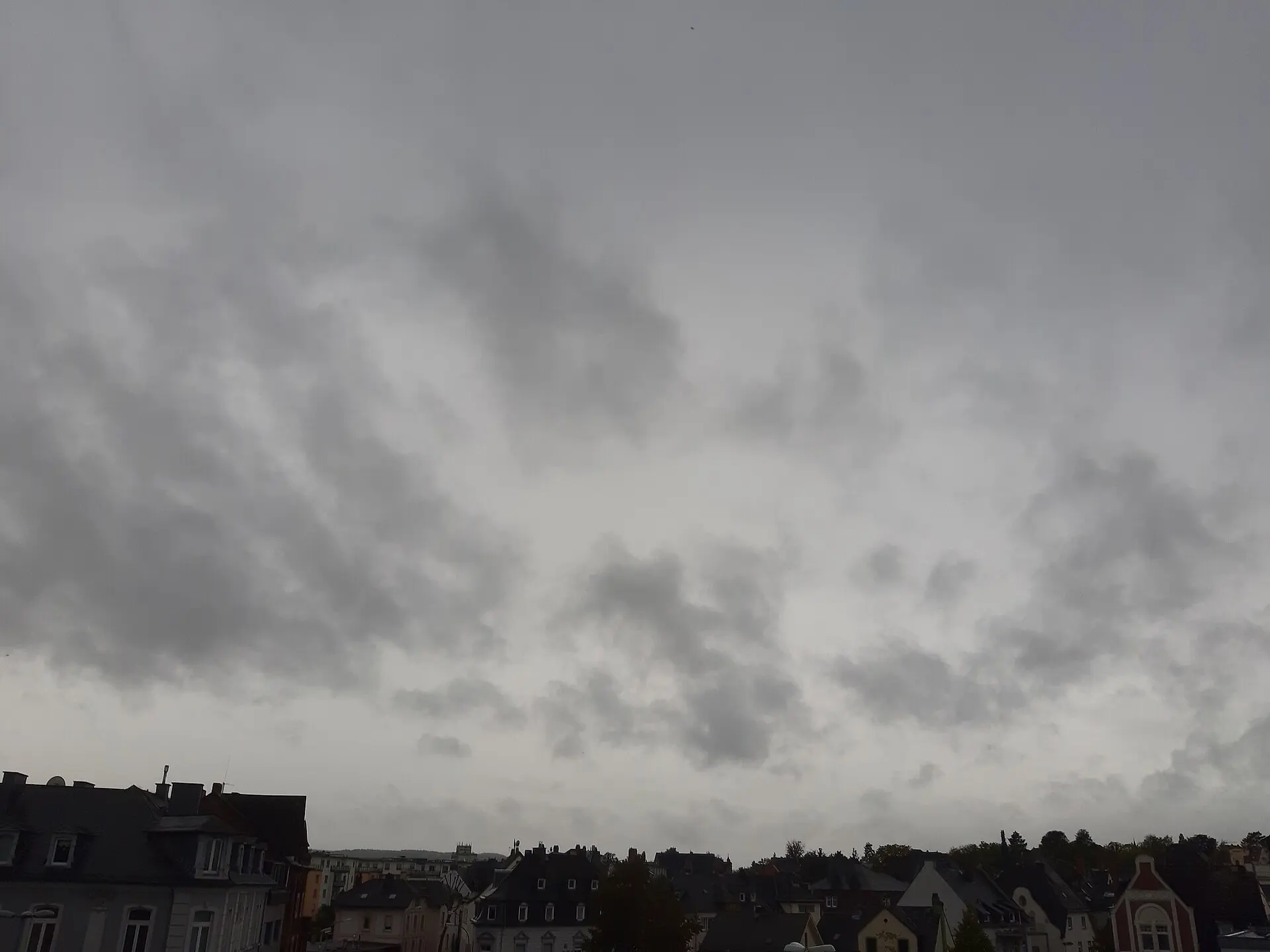
Photo: GerritR / CC BY-SA 4.0 · Wikimedia Commons
- Typical altitude
- Base often below 2,000 m, extending upward through several levels
- WMO abbreviation
- Ns
- Altitude band
- Middle clouds
- Also called
- rain cloud
How to recognise it
- A uniformly dark grey layer, thick enough that the position of the sun cannot be made out at all.
- A diffuse, ragged base, often blurred by falling precipitation rather than showing a clean edge.
- Small torn fragments of cloud (pannus) drifting below the main layer in the rain.
- No structure, no gaps, no variation in brightness across the sky.
What weather it signals
- Continuous rain or snow, typically lasting several hours rather than minutes.
- The precipitation is steady and moderate rather than heavy and sudden — nimbostratus does not produce thunder, lightning or hail.
- It is the final stage of an approaching warm front, arriving after cirrostratus and altostratus.
How to photograph it
- Protect the lens. This is the one cloud that will actively rain on your equipment.
- Shoot toward a bright patch on the horizon; a fully uniform grey frame is difficult to read as a photograph.
- Include rain-soaked surfaces, reflections or a wet road in the foreground to give the flat light something to work with.
Fun facts
- The Latin nimbus means "rain", making nimbostratus literally the "rain layer" — one of only two genera whose name announces precipitation.
- It is officially classified as a middle-level cloud, even though its base is often low enough to touch hilltops, because the layer itself extends through several altitude bands.
- Nimbostratus is thick enough that it often cannot be photographed from the ground in any way that distinguishes it from a plain grey sky — meteorologists identify it largely by the rain it is producing.
Easily confused with
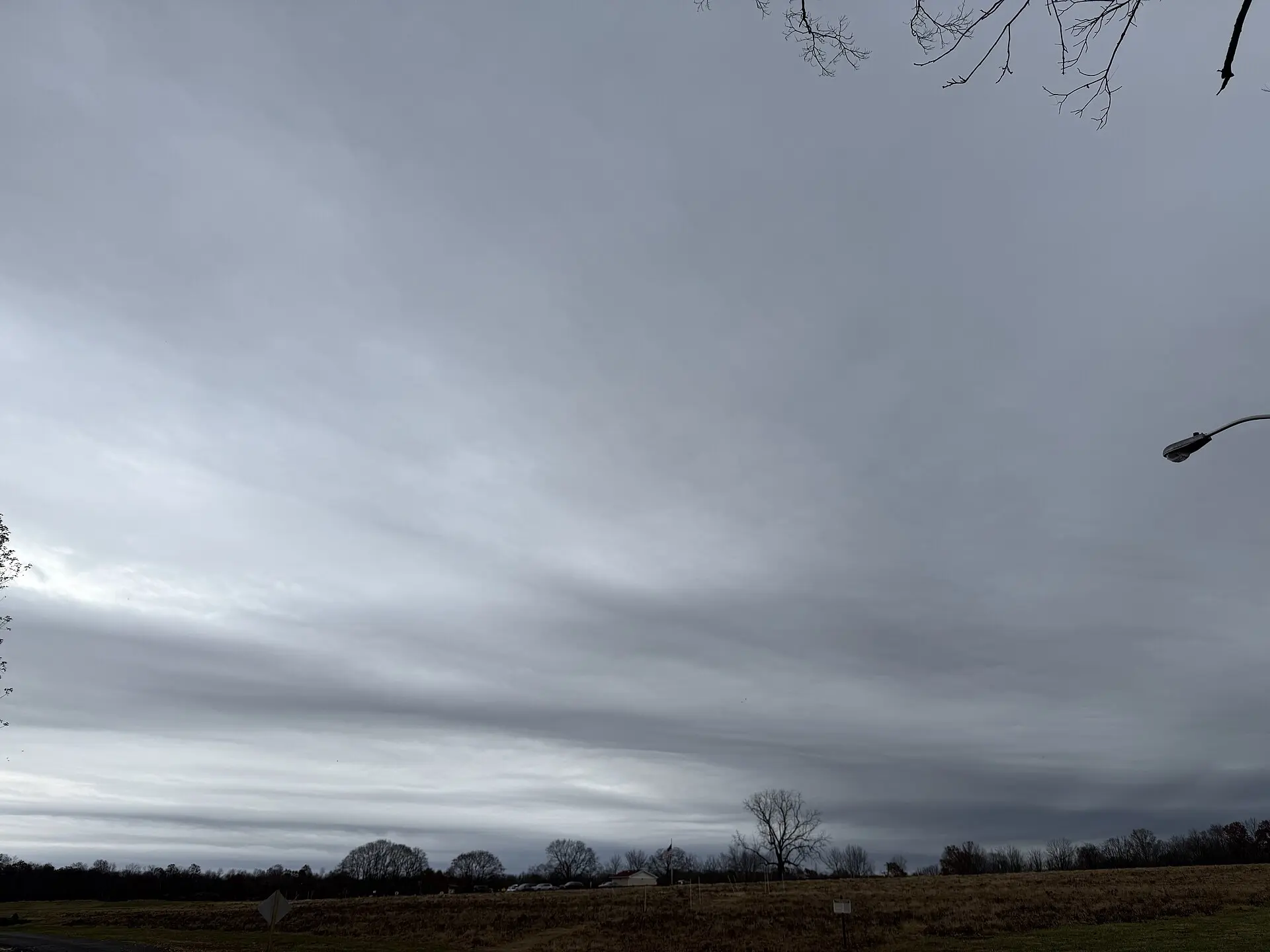
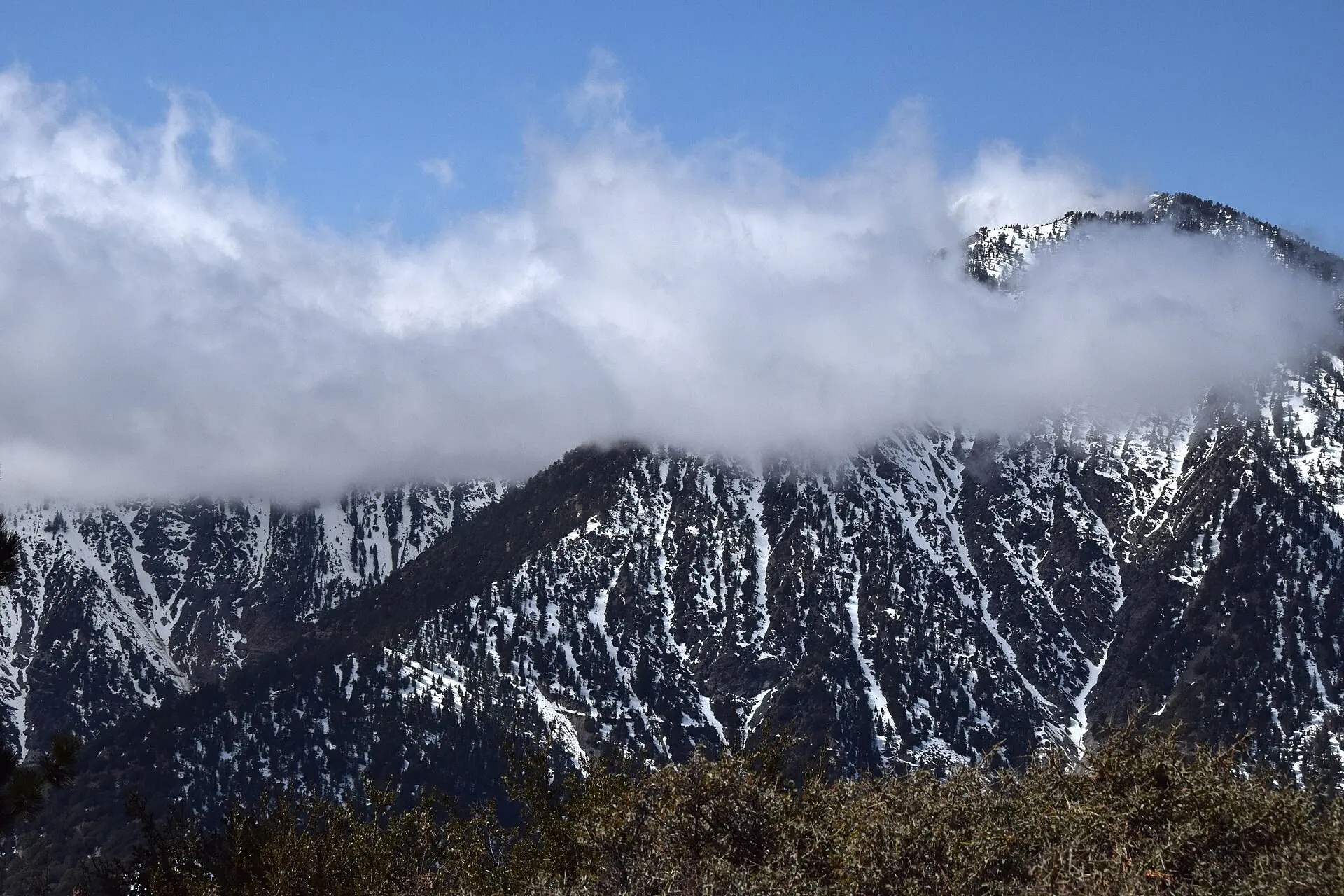

Frequently asked questions
How do I tell nimbostratus from stratus?
By the precipitation and the darkness. Stratus is a thin, light grey layer that produces at most drizzle, and the sun can often be made out through it. Nimbostratus is thick, dark and completely opaque, and delivers steady rain or snow for hours.
Does nimbostratus produce thunderstorms?
No. Thunder, lightning and hail come from cumulonimbus. Nimbostratus produces widespread, steady, undramatic precipitation with no convective activity.
How long does nimbostratus rain last?
Typically several hours, and sometimes most of a day. It is a frontal cloud covering a large area, so it takes a long time to pass overhead — quite unlike a shower from a cumulonimbus, which is over in minutes.
Not sure what you are looking at?
Point your iPhone at the sky and let Cloud ID name it for you — with three ranked candidates and the reasoning behind each one.
Download on the App Store