Cumulus
Cumulus are detached, brilliant white heaps with sharp cauliflower-like tops and distinctly flat bases. They are the clouds children draw, the classic sign of a pleasant day — and the seed from which thunderstorms grow.
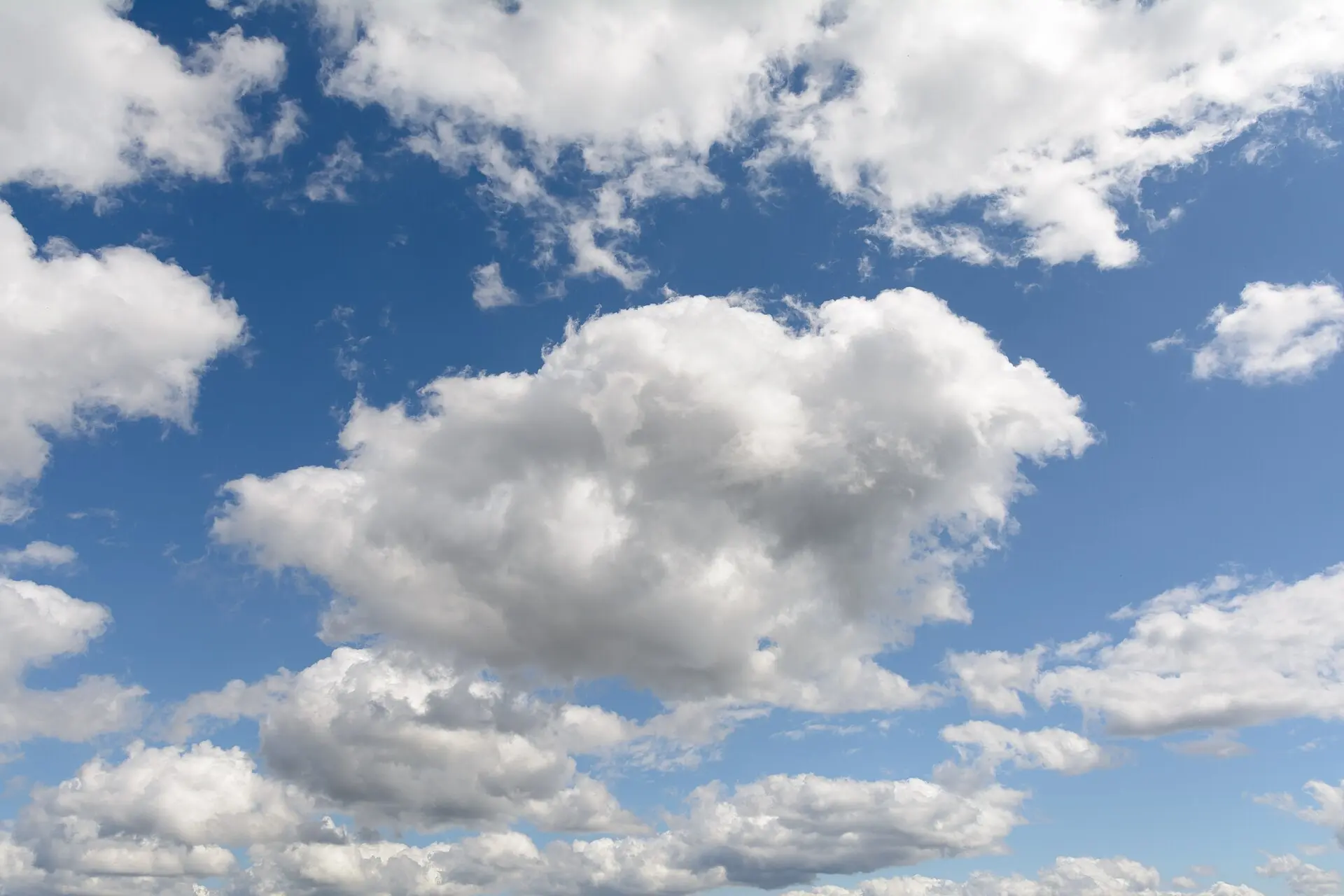
Photo: Uoaei1 / CC BY-SA 4.0 · Wikimedia Commons
- Typical altitude
- Base typically 600–2,000 m, tops far higher
- WMO abbreviation
- Cu
- Altitude band
- Clouds with vertical development
- Also called
- fair weather clouds
How to recognise it
- Detached, well-defined heaps with clear edges, separated by blue sky.
- A flat, level base — every cumulus in the sky shares roughly the same base height, marking the condensation level.
- Brilliant white sunlit tops with a bubbling, cauliflower texture, and a noticeably darker underside.
- Sharply outlined rather than fuzzy. If the edges are soft and fibrous, the cloud is turning into cumulonimbus.
What weather it signals
- Small, flat cumulus with more blue sky than cloud (Cumulus humilis) is the definition of fair weather. It is the forecaster's "fair weather cumulus".
- Cumulus growing taller than it is wide through the day (Cumulus congestus) means the atmosphere is unstable, and showers are likely.
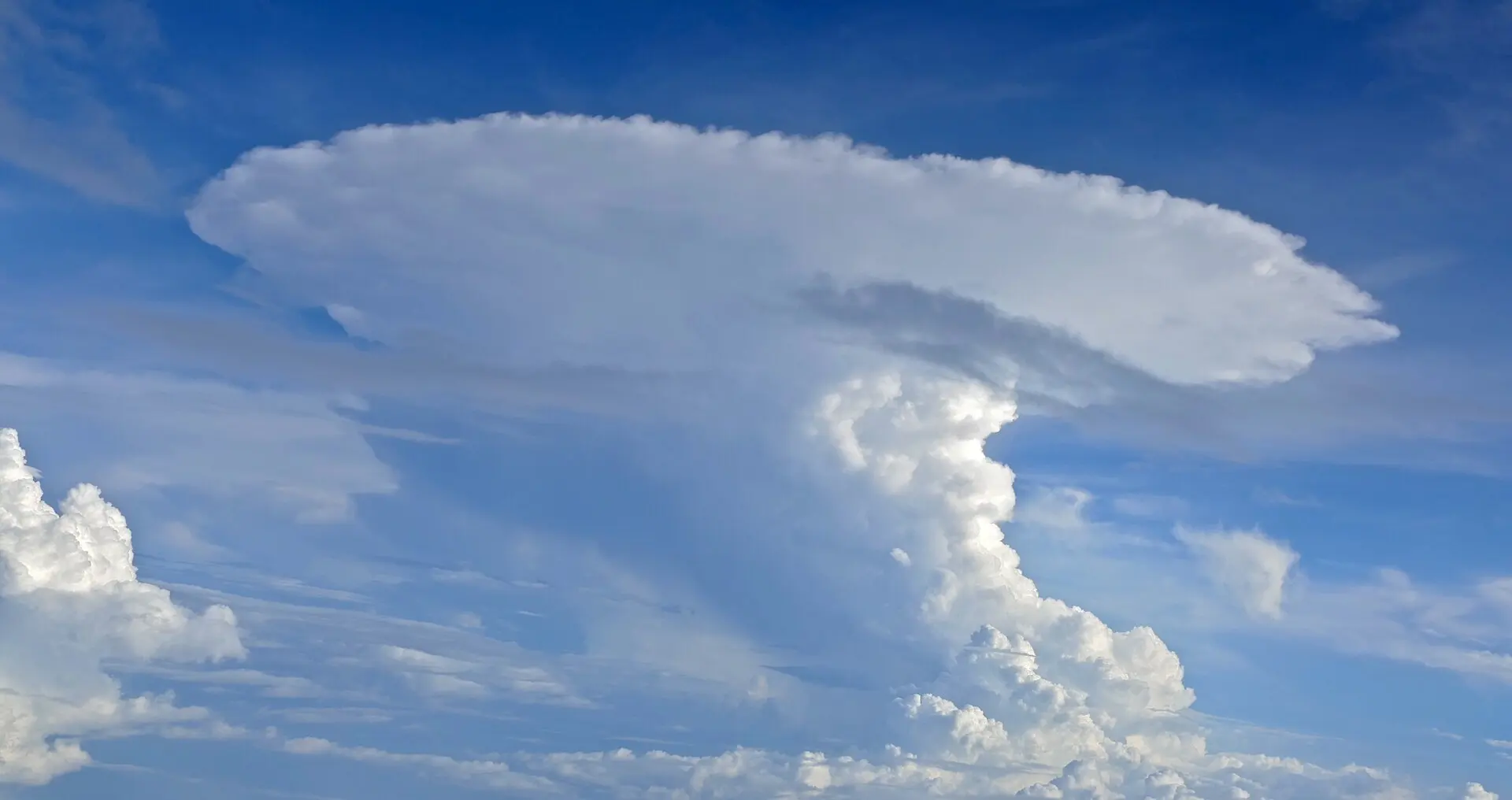
- If the crisp cauliflower top loses its sharp outline and turns fibrous and anvil-shaped, it has become cumulonimbus and a thunderstorm is developing.
How to photograph it
- Shoot in the early to mid afternoon, when daytime heating has built the clouds to their best form.
- Use side lighting rather than shooting into the sun. It brings out the three-dimensional bubbling structure of the tops.
- A polarising filter deepens the blue sky and makes the white heaps stand out sharply.
- Include a low horizon so the flat cloud bases read as a level line across the frame.
Fun facts
- A typical medium cumulus weighs around 500,000 kg — roughly the weight of a hundred elephants — held up entirely by rising air.
- The flat base marks the exact altitude at which rising air cools to its dew point. That is why every cumulus in the sky lines up at the same level.
- Glider pilots use cumulus as a map of invisible rising air, flying from one to the next to stay aloft for hours without an engine.
Easily confused with

Frequently asked questions
Do cumulus clouds mean good weather?
Small, flat ones do. Cumulus humilis — wider than it is tall, with plenty of blue sky between the clouds — is the classic fair weather signal. But watch them through the day: if they keep growing vertically, the same clouds can develop into showers or thunderstorms.
Why do all cumulus clouds have flat bottoms?
Because the base marks the condensation level — the height at which rising air has cooled enough for water vapour to condense. That altitude is essentially the same across a whole air mass, so every cumulus base lines up at the same level.
When does a cumulus become a cumulonimbus?
When it stops being crisply outlined. As long as the cauliflower top is sharp-edged it is still cumulus. Once the top glaciates into ice crystals it turns fibrous and soft, often spreading into an anvil — at that point it is cumulonimbus and can produce lightning.
Not sure what you are looking at?
Point your iPhone at the sky and let Cloud ID name it for you — with three ranked candidates and the reasoning behind each one.
Download on the App Store